Flat roofing · Victoria & Vancouver Island
Flat roofing in Victoria, BC — TPO, PVC and torch-on.
Flat roofs are where I’m hired most: as the project manager who specifies the system, the specialist who installs the hard ones, and the guy companies call when a flat roof has to be right. I’ve put down single-ply and torch-on roofs from a 25,000 sq ft warehouse to backyard sundecks, and my TPO installation videos have been watched more than 165,000 times.
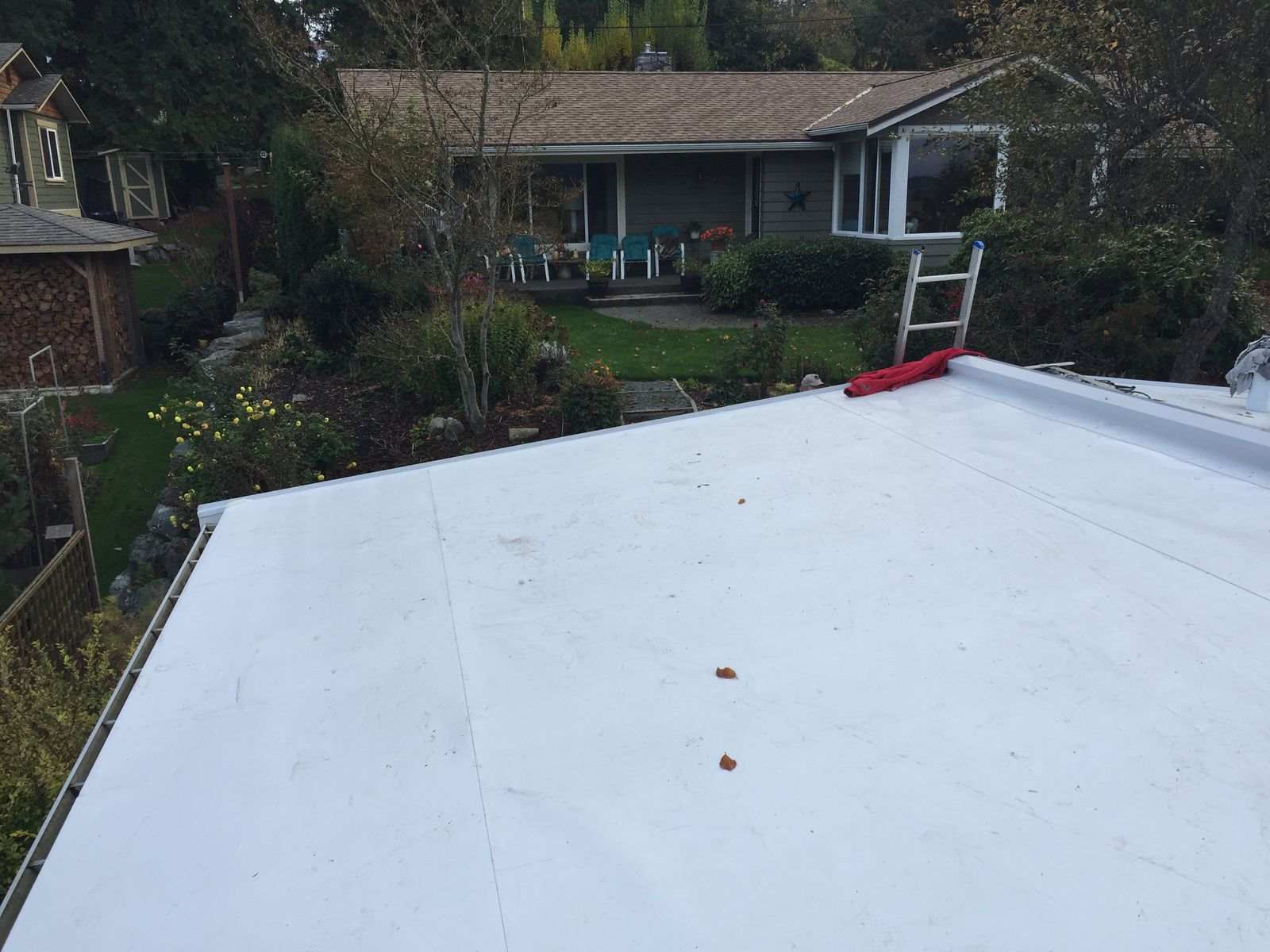
Single-ply: TPO and PVC
A single-ply roof is one continuous membrane — TPO or PVC — rolled out in wide sheets with the seams heat-welded together. Done right, the seam is the strongest part of the roof. There are three ways to put it down:
- Mechanically attached — fasteners and plates along the seams. The workhorse method for most commercial and residential flat roofs.
- Fully adhered — the membrane is glued down. Smoothest finish, best on roofs people look down on from above.
- Point-affixed / RhinoBond — induction-welded plates under the membrane. No seam fasteners, excellent wind uplift resistance.
I worked extensively with Mule-Hide TPO systems — up to 20-year manufacturer system warranties when installed to spec. White TPO also reflects summer heat instead of cooking your top floor.
Torch-on (SBS modified bitumen)
Torch-on is two plies of modified bitumen membrane melted onto the roof with an open-flame torch. It is heavy, tough, and very forgiving on small, complicated roofs — the kind with six vents, two skylights and a chimney in 400 square feet. It is also the system where installer skill matters most and shortcuts burn people, sometimes literally. I’ve torched for decades, in Europe and here — most of that work with Soprema SBS membranes, including the Mammoth line on larger commercial roofs. Fire watch and proper detail work are not optional extras; they are the job.
Choosing a flat roof system
Most flat-roof pages on the internet are written by a company that sells one system. I install TPO, PVC and torch-on, and I’m not tied to any of them — so the advice on the torch-on vs TPO vs EPDM comparison page is the same advice I give on a roof: what suits your building, your slope, your budget and this coast’s weather. Residential flat roofs over houses, garages, carports and additions are the same conversation at a smaller scale.
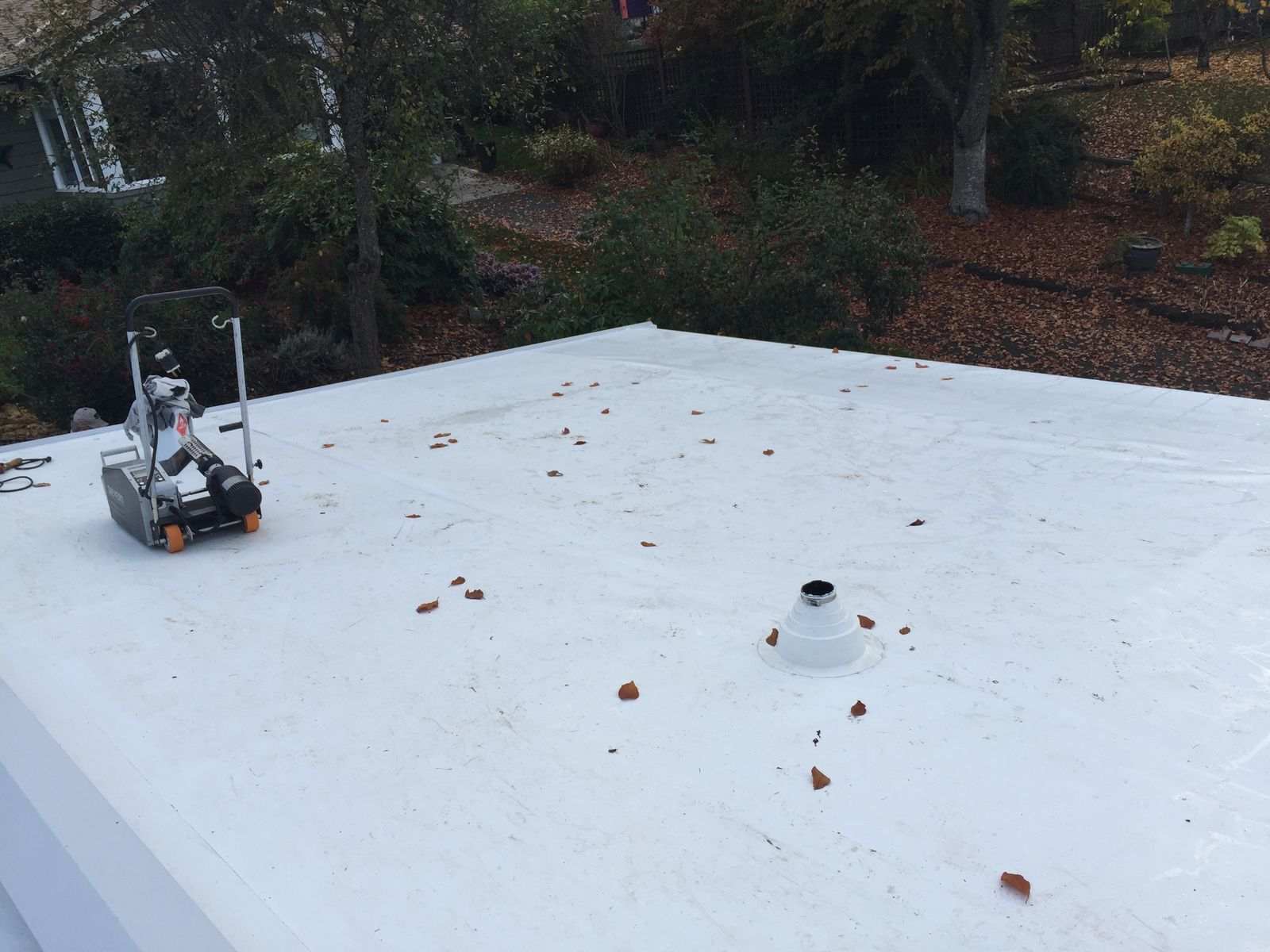
Flat roof projects on Vancouver Island
- Slegg Lumber warehouse, Langford — 25,000 sq ft (2014)
- Travelodge, Duncan — 12,000 sq ft TPO (2015)
- Wax Museum, Victoria — 6,000 sq ft (2012)
- The Root Cellar, Victoria — 5,000 sq ft (2015)
- Residential flat roofs — Salt Spring Island (2015), Mill Bay, Victoria and area
Installation videos
My TPO installation series on YouTube has been watched more than 165,000 times. This is the work, filmed on real Victoria roofs — seams, details and all.
CWS - TPO roofing installation Victoria, BC Part 1 — 71,950 views. The full installation, start to finish.
CWS - TPO roofing installation Victoria, BC Part 3 — about 70,000 views. Seam probing, patches and detail work.
CWS - TPO roofing installation Victoria, BC Part 2 — about 23,000 views. Installation details and the welding robot.
The repair video — how I find and fix leaks on a TPO roof — is on the roof repair page. All of the videos, including a TPO installation on Saltspring Island, are on the CWS YouTube channel.
Frequently asked questions
TPO or torch-on — which is better for a flat roof on Vancouver Island?
Both are good systems when installed properly. TPO is a single-ply membrane with heat-welded seams — clean, light-coloured, energy-reflective, and proven on big commercial roofs. Torch-on (SBS modified bitumen) is a two-ply system melted down with a torch; it is tough and forgiving on smaller, cut-up roofs with lots of details. Denis installs both and will tell you honestly which suits your roof — he is not tied to one manufacturer. The comparison page on this site lays out TPO, torch-on and EPDM side by side.
How long does a TPO flat roof last?
A properly installed TPO roof typically lasts 20–25 years on the BC coast. Manufacturer system warranties of 10, 15 or 20 years are available when the roof is installed to spec. The seams are the whole game: heat-welded seams are stronger than the membrane itself, while a badly welded seam is where TPO roofs fail.
How much does it cost to replace a flat roof in Victoria?
As 2026 general guidance, flat roof replacement in the Victoria area runs about $8–$15 per square foot installed, with TPO typically $7–$12 per square foot. Tear-off, insulation, slope correction and the number of details (vents, drains, skylights) move the real number. See the roof cost page for a breakdown, or ask Denis for a written estimate.
Can a flat roof be repaired instead of replaced?
Often, yes. If the membrane is sound and the insulation underneath is dry, a proper repair — new welded patches, re-done seams and flashing — can add years. If the insulation is soaked, repairs are money thrown away. Denis checks what is under the membrane before recommending anything.
How much slope does a flat roof need?
A flat roof is never truly flat — it needs positive slope to the drains, about 2% (a quarter inch per foot) in the field of the roof, built with tapered insulation on most re-roofs. Water that still sits 48 to 72 hours after rain is ponding, and ponding shortens a roof’s life. If your roof holds puddles for days, that is a drainage problem to fix, not a fact of life.
Request a flat roof quote
Big commercial roof, strata, or a flat roof over your garage — describe it and I’ll tell you straight which system fits and what it should cost.
Prefer to talk? Call 250-889-5620 or email info@waterproofingsystems.ca.